Sunday, February 22, 2015

Why Bradley Cooper Could Sit It Out: The Eroticism of War and Victimization of Slavery.

Oh, Bradley Cooper


Russovoir likes his men more than they consciously appear. With talent. Cooper is more than a pretty face. The first time Russovoir discovered him, mouth agape, admittedly fanning, might as well throw in a crystal ball and call him Russovoiryant, because God knows Russovoir had been sober to foresee this man will paint the town red, walking down it dapperly, just after the convulskin underground red in The Midnight Meat Train (2008, below).


And then The Hangover (2009) happened. Which Russovoir understand tripled in bankability of $277.3M from only a $35M budget. That's pretty impressive, no doubt. But here's the problem: Russovoir doesn't want Cooper to be a comedian. Is that selfish? Russovoir doesn't think he's either effective nor eligible to be one. He's too, say, valuable. Not that comedians aren't valuable. Let's just say he's no Joel McHale. Or maybe, Russovoir is in love with many unrealized roles he could be perfect in that slapstick comedy was obviously just going to have to do for now to pay the bills. Then Hangover II and Hangover III, while committing to more serious roles in between like Limitless (2011) and The Words (2012). Bradley Cooper has had his career laid out like non-biodegradable and biodegradable.

American Sniper would be Cooper's third Oscar nomination, remembering his outstanding performances in Academy Award nominated Best Picture The Silver Linings Playbook (2012) and American Hustle (2013). Russovoir is convinced his presence on the red carpet, a nod from the Academy, is because finally he has separated himself from what's easy and has given more. And Russovoir couldn't be happier for him. He is a testament that the Academy isn't interested about how the camera loves you, but instead why the camera loves a cliche* Bradley Cooper.

Shots were fired when American Sniper was revealed to be in the running for Best Picture in the most anticipated 87th Academy Awards. It raised a reasonable, powerful question that shook the very foundations the institution stands by, however long-standing they have been: WHY? Clint Eastwood has pulled the trigger, and attracted an audience ($350M) only from the noise it made than the actual damage it's done. Sure, cinematography is one bullet in the cylinder. Cooper is another (and has bitten the bullet; the transition was admirable). Editing, let's load that in. Russovoir will leave it up to you the next three. Whatever you decide that qualifies the film an Oscar nod, here's Russovoir's problem: Aren't you tired of war movies? The eroticism and exhilaration of war, a familiar template of whose side are you on (U! S! A!), the manipulative virility of violence, those aren't the 'escape' we want why people go to the movies.

Oops, Russovoir forgets. America doesn't only run on Dunkin', but also in war. War is a billion-dollar business, and America will be damned if they don't get a share of that. Oscar has now become Uncle Sam. The Academy has become a mediator by which these 'old, conservative, white' (so Russovoir has heard) men seem to feel obliged, possibly even had lived through to influence judgement, invariably including war movies into the outstanding nominees. Also, the Academy is of the Americans, by the Americans, and for the Americans (so help me God), and anyone and anything upholding this nationalistic belief surely in fine print, had been given an invisible pen with invisible ink and signed the Declaration of American Credence.  


The Civil Right Act, Amendment IV, Section 5
1.1 A black movie nominee silences the accusation of racism.


The victimization of the black has taken to a whole new level. It is now considered 'racist' if the Academy hadn't included a black film in the bunch. And what for? Slavery film. Again. What is with this yearly reminder of slavery? Does this empower them? Does this give them a favor so that if an employer dismisses their job application they're immediately called racist, and not consider the fact that he has a criminal record? Why keep making films that build tension among each other? How about black inventors? black artists, Get On Up? Tasteful romance, Beyond the Lights (below)? Russovoir doesn't seem to understand why the black people always have to be represented in this image the rest has to sympathize for. The grossest part is that you are fully conscious of your sympathy, with which ultimately influenced judgement even for the stringent Academy. Then again, with power and wealth of Oprah Winfrey, who produced and starred in Selma, one could say Russovoir's opinion is not one of her favorite things.

Gugu Mbatha-Raw: Black Princess to Black Pop Sensation.


Now, have you ever noticed your favorite artist's CD has like twelve songs, and you're convinced it's worth every dollar, but when you get home and listen to each one, you realized only ten are great, and the other two aren't just consistent? The Academy Awards kind of feels that way. At least just this year, and only as far as Russovoir started following the show. He went ahead and segregated the eight songs of Hollywood - the artist - between the fillers and fighters.

Fillers: Patriotism and Racial Equality.

Fillers: Artsy and Gimmicky.

    
Fighters: Performance, Message, and Storyline.

You may have a completely different opinion on this. This is America. It prides itself of freedom of speech; it's totally okay. Everyone's a critic anyway. This is simply speaking from the core of the movie aficionado and aspiring screenwriter in Russovoir. Again, the Academy is a school, and we should honor directors, screenwriters, actors who not only placed effort in gimmick and special effects, but into an original, compelling story. Whiplash, Birdman, and The Theory of Everything, there is nothing more in the world that would give peace in Russovoir if either one of them wins. Listen to him, what peace is he talking about? 1) Peace is a selfless ideal existing in a selfish world and 2) Unless there's going to be a last minute change and bump a nomination for Jake Gyllenhaal for Best Actor and Nightcrawler for Best Picture, peace has already been violated. Shame on you, Academy.

Best Original Screenplay Nominee. Only.

*Russovoir likes his men more than they consciously appear. With talent. Gyllenhaal is more than a pretty face. The first time Russovoir discovered him, mouth agape, admittedly fanning, might as well throw in a crystal ball and call him Russovoiryant, because God knows Russovoir had been sober to foresee this man will paint the town red, walking down it dapperly, just after the convulskin underground dread in The Day After Tomorrow (2004).


Friday, December 19, 2014

Hector's Making A List, Checking and Strive.

This is why we need friends. At least Russovoir is experientially speaking for himself. He would have never taken a second look for Hector and the Search for Happiness. This hasn't happened just once too! Ben Affleck's Academy Award-winning Argo for instance. It didn't look appealing enough, not catchy enough. Not so much from its trailer, that which, apologetically, hadn't had surfaced in the interim before a movie normally starts, but more of the Academy Award Best Picture's poster. Dreary, Russovoir thought. While we should account visual presentation, just as plating is to food, on our movie posters, we must not judge a film by its boring poster. And oh, almost forgot, if it wouldn't have been for a friend, Deya Rosales, one night Russovoir bumped into at the mall, ignorance for Argo, a thrill-seeker blockbuster, would've had been a son of a bliss.
    
Remy Soni. The friend responsible for my superfluous yet each one sincere thank you's for granting a FREE movie screening of Hector and the Search for Happiness. One could tell, already, Russovoir found happiness in the fortune. But only just the beginning; there couldn't be any other way anyway, otherwise there is no point of gathering you all here. Simon Pegg's HSH is a perfect Christmas* film (*R-18)

HSH, abbreviated, because, foremost on factors affecting passing on this film is its title. Can they get any longer? Understandably, often, films need to have a longer title for specification (Harry Potter and the Sorcerer Stone) or each word is dependent to the other; the article 'the' and prepositions 'of', 'to', e.g. (Guardians of the Galaxy). It wouldn't work if we remove a word. Imagine, simply Search for Happiness. Isn't that simpler, easier, catchier? To aspiring screen writers out there, if you can help it, K.I.S.S. your movie titles. Keep It Short and Sweet. Retention is the greater marketing.

Even so, all is forgiven (mainly because it's based from a Francis Lelord novel of the same title). The story gave Russovoir the touchy-feely. He wanted to be loved right there, right now, in between arm rests and darkness abreast. The style in which both the journey and destination of searching for happiness is a nodding, finger-wagging experience. "I wish I had a notepad to write all those points down.", Remy confessed not long after. If we could have, we would have. There were many valuable quotes from the chance encounters of Hector (Pegg) that ultimately filled his 'adventure notebook' his wife Clara (Rosamund Pike, Gone Girl) slipped in (think Disney Pixar's Up (2009). Pike herself was at her most charming role too; this is more of her character than of the psychopath Amy Dunne. Yet sublime on both. Spontaneous, cohesive, and the attention to detail complementary to the unexpected turn of events in each of his next stop, as a viewer, Russovoir had the beginning of happiness, and later still have it.

Hector and the Search for Happiness is a surprise success. Unsung, even. Factors affecting this is primarily because simply, it's Simon Pegg. He's known for his works Shaun of the Dead (2004), Hot Fuzz (2007), Paul (2011), the recent The World's End (2013), to name a few. He's the funny guy. How could he possibly make us feel any other emotion than laughter? It's a question that still courses through Russovoir's veins, happy hormones streaming parallel, injected with the thought that this Steve Carell-esque transition is medicine in enumerative doses, healing the viewer as much as it has for Hector.

Friday, November 14, 2014

Interstellar: Houston, We Have A Problem.

This is probably one of a handful times Russovoir is going to come forward from the line and admits he felt Interstellar was like a comet. We are told it could make wishes come true, and never did.

Russovoir is not pretentious. He's not going to like something because the world likes it. Conversely, he's not going to dislike something because the world does. Especially movies. His mind works on its own in that department (The Twilight Saga is a trailblazer, for example).

Memento (2000). The Prestige (2006). Inception (2010). Russovoir calls it the Nolan's Touch. Anything he puts his mind into, it turns gold. Russovoir respects - no, bows down - to his dedication, inclination, and creations. He is a star among many stars in the sky that people look up to; if he were a constellation, Russovoir thought of a perfect pattern unmistakably ascribed (below):


Set of stars to connect, Russovoir will leave that to NASA. It's easy.

You see, Christopher Nolan means the world. The world Russovoir has made for himself and the world Nolan has shown to the world for our entertainment is coexisting in harmony. Seeing this rather unfortunate unrequited relationship we have, this is then actually unsettling to raise an eyebrow for Interstellar. This is not an exegesis even. With which lack of such is because the film prevented it. Now, Russovoir isn't exactly the sharpest tool in the shed, or shall we say, the brightest star in the evening sky, but he prides himself to work with a film all the time. Humility aside, there isn't one film he didn't immediately understand. And other times, without pretense nor self-pity, the film in question will play over and over in his head, and long after the credits, long after the hike on Magnificent Mile home, before changing to his jammies, he has already understood the majority of it. Majority instead of the entirety for Russovoir reserves the right to make mistakes; after all, a film is open to several interpretations. Interstellar stole this from us.

Selfish. Lazy, and information overload, Nolan had an objective and that is to be self-righteous. Aspiring director Tyler Gotham, a good friend of Russovoir once said, "People think if they don't understand something, it's art." He was at that time referring to Wes Anderson's The Grand Budapest Hotel (2014). Strangely, this young man took the very words Russovoir has been swallowing for fear of being a snob or too critical (although, in his defense and for what its worth, the film has theatrical allure. Russovoir won't be caught dead watching yet another Anderson film in hopefully near future).

Theatrical allure. Visual orgasm. Stunning. Amazing. Visual effects tend to detour us from the heart of cinema. James Cameron's Avatar (2009), it was not only an ultimate display of the patient 10-year long hold off for computer graphic image (CGI) suitability, it also has a concrete, audience-friendly storyline. If your basis of a great film lies solely in visual effects, take your opinion up Uranus.

Nolan is a very smart man. Russovoir wouldn't want him to be anyone else but himself. There is just an element of his recent film that's just too much of himself. First, let's entertain the suspicion that Interstellar is on the same orbit as Alfonso Cuaron's Academy award-winning Gravity (2013). And if he's like any other auteur, Nolan may be on the same orbit but, he's on a different axis. Second, during which the axis has clearly established itself as a novelty, the audience has been exhausted of information. Three long hours of information with which we, or not to sound accusatory, personally Russovoir couldn't work with (nor around). And had there been information still processing - Russovoir refused to give up on its storyline - new information, obscure information comes up, as though we're astronomers, quantum physicists, space theorists, or even Sheldon Cooper apprentices, who could naturally work one's way through. The film failed to capture the audience. Audience comprising of men and women of 9-to-5 working day. If Nolan's initial goal is to a different audience than mentioned, well, Russovoir would be more than happy to be corrected. Though so much marketing has been done, and what distinguishes a dress is the designer, the venerated director preceding the film, Interstellar has had, and has been having, attention like sightings of a UFO, always curious, and yet overhyped.

There is, of course, sensibility felt for the single father (Matthew McConaughey) to his children, husband to a cancer-ridden wife. But imagine this. The exchange of communication between ground control (film) to a group of astronauts (audience) is doing fine (2/3 of the narrative), until an interference. We're simply picking up unfamiliar reception, unfamiliar information arduously (still) processing in our overwrought minds. The irony of it is that what seemed to be information overload is information withheld. Russovoir took the fair chance to ask his friends whose Facebook posts implied they understood the film. While they speak enthusiastically of it, it is of Russovoir's inherent propensity to not buy it. There seems to be a kind of enigmatic credulity in science fiction films recently; we thought Johnny Depp's Transcendence (2014) was the last of them.

This is a long review, a passionate review if he can say so himself. Both polemic and panegyric. The former at its mildest because Russovoir will have to turn gold for Nolan's next touch. Nolandary.

Sunday, September 14, 2014

The 25 Classic Filipino Films.

There's this chain posting and tagging going on Facebook lately, and it's about movies! If there's anything Russovoir has been all over, and will be over for a very long time, it's going to have to be movies. Curious about the '15 Movies That Will Always Stay With You' from selected people of valued space and attention, from which raises the question how does one become valuable, on which definitely he goes for content and character and much less on unnecessary, 'obligatory' (how does it even become obligatory?) selfies and overpublicized lifestyle, on his NewsFeed, Russovoir observed two (2) peculiarities.

Before anything else, there attached 'rules' with this chain. The rules: Don't take too long to think about it. Fifteen films you've seen that will always stick with you. List the first fifteen you can recall in no more than fifteen minutes. Now, films that will 'always stay with you' is not and must not simply be like picking flowers at the park. Films that will always stay with you, one should uproot the flowers from its clingy source. Films that will always stay with you will have to need more than fifteen minutes. Otherwise, pressured by a subconscious ticking clock, a number of people's films go so recent Russovoir wonders if they really 'always stayed' with them or were the ones that first came to mind, as though films is a game of Boggle. 

That's one. Two, Russovoir noticed his Filipino friends' films that always stayed with them are foreign films. See, he gets it. There aren't many Filipino films that have been recently made that could possibly come into mind in fifteen minutes, let alone those which have stayed. So fuck the rules. It simply doesn't make sense. If you're a Filipino and there's not one Filipino classic film in the 15 Movies That Will Always Stay With You, I'd think either 1) you're pretentious 2) you're a square, or 3) - less scornful and more helpful now - that you need a little reminding. Categorized in genres, here are the 25 Classic Filipino Films that once electrified Filipino blood. 

Comedy

25. Oki Doki Doc (1996) - Aga Muhlach


24. Milyonaryong Mini (1996) - Ogie Alcasid, John Estrada


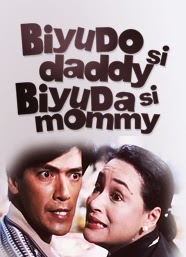
23. Biyudo Si Daddy, Biyuda Si Mommy (1997) - Vic Sotto


22. Haba Baba Doo! Puti Puti Poo! (1998) - Redford White, Babalu


21. Tik Tak Toys May Kolokotoys (1999) - Serena Dalrymple


20. Home Along Da Riles: The Movie (1993) - Dolphy, Nova Villa


19. Ang Tanging Ina (2003) - Ai Ai De las Alas, Eugene Domingo


Comedy Central:
Crying Ladies (2003)
Annie B. (2004)

Horror

18. Shake, Rattle, and Roll I, II, III, IV


17. Tiyanak (1988) - Janice De Belen


16. Aswang (1992) - Alma Moreno


15. Multo In The City (1994) - Aiko Melendez, Jacklyn Jose


14. Magandang Hatinggabi (1998) - Marvin Agustin


13. Sa Piling Ng Aswang (1999) - Gina Alajar


12. Feng Shui (2004) - Kris Aquino


Romance

11. Flames: The Movie (1997)
    Paano Ang Puso Ko? (1997)
    Dahil Mahal Na Mahal Kita (1998)
    Kay Tagal Kang Hinintay (1998)

Rico Yan


10. Kung Ayaw Mo, Wag Mo (1998)
    Labs Kita... Okey Ka Lang? (1998)
    Hey Babe (1999)
    Kung Ikaw Ay Isang Panaginip (2000)
    Tunay Na Tunay: Gets Mo? Gets Ko! (2000) - (no picture)

Jolina Magdangal

 9. Got 2 Believe (2002) - Claudine Barretto*

*Barretto is Philippines' TV Queen so obviously an exception has to be made. Her finest romance performances are:

9.1 Mula Sa Puso (1997)
9.2 Saan Ka Man Naroon (1999)
9.3 Sa Dulo Ng Walang Hanggan (2001)
9.4 Marina (2004)


8. Muling Ibalik Ang Tamis Ng Pag-ibig (1998) - Judy Ann Santos*
   Isusumbong Kita Sa Tatay Ko (1999)
   Kasal, Kasali, Kasalo (2006)
   

*A Queen always have to have a sister, not necessarily an evil one. Santos is an icon of classic Filipino courtship. Her finest TV performances are:

8.1 Mara Clara (1992)
8.2 Gimik (1996)
8.3 Esperanza (1997)


Disclaimer: The Jericho Rosales + Kristine Hermosa didn't cut it.

Fantasy/Drama 

Batang X (1995)
(L-R) 1991, 1998, 1999
Mulawin: The Movie (2005)
Little 7's:
Blusang Itim (1986)
Valentina (1990)
Computer Kombat (1997)
Kokey (1997)
Yamashita: The Tiger's Treasure (2001)

Magic Kingdom (1997)
Sarah: Ang Munting Prinsesa (1995)


Muro-ami (1999)

Coming-Of-Age a.k.a The Patrick Garcia Age

(L-R) 1996, 1997, 2002
Ang TV Movie: The Adarna Adventure (1997)
6. Trip (2001) - John Pratts, Heart Evangelista


Drama

 5. Kapag May Katwiran, Ipaglaban Mo!: The Movie (1995)


4. May Nagmamahal Sa Iyo (1996) - Lorna Tolentino, Stefano Mori


3. Bata Bata, Pa'no Ka Ginawa? (1998) - Vilma Santos, Carlo Aquino


Drama Studio Presents:

Madrasta (1996)
Tanging Yaman (2000)
Mila (2001)
Mga Munting Tinig (2002)
Dekada '70 (2002)
Mano Po (2002, 2003)

2. Magnifico (2003) - Jiro Manio, Isabella De Leon


1. Anak (2000) - All Time Favorite - Vilma Santos, Claudine Barretto


Trivia: Anak was submitted for the 73rd Academy Awards for Best Foreign Language Film. Unfortunately, it had had no nominations.


DID RUSSOVOIR MISS ANYTHING? COMMENT.


Wednesday, July 2, 2014

Remember Me, I'm Robert Pattinson.

And not simply 'that Edward Cullen guy'.

You have no idea what inextinguishable pleasure it, you could say, infected to Russovoir from The Rover for Robert Pattinson. He completely went for the neck, sank his teeth, and from there, it's a waiting game on how far and how much he's capable of keeping you in his grip. The fact that there was more blood to the eyes than to the rest of the body was a clever - of whose blame, really: the actor or the audience? - ploy. Speechless, immobile, but unrelenting rapport for this fresh character, unseen of to the population of Forks, Washington, portrayed by Pattinson; the twilight of a typecast.

The story is simple, without frills, no back story; open-ended, one could say. There was no support to build on from, either the characters and setting; which left one feeling lost (until it gets to the ending, guaranteed). So it dragged on for a while, Russovoir admits. Accent so heavy and deliberate that what the film did instead is disusing one's sense of hearing* to draw focus on one's eyes interplaying between one's feelings. The result is disusage of one's ability to speak. The Rover is without a doubt a Robert Pattinson film. Like a wooden stake into a sleeping vampire, he nailed it.

"Why did you leave me out there? I'm your brother!"

*sparingly

Like two sharp fangs, Remember Me (2010) and this, The Rover, we're not looking at a vampire, no, he's way behind that stage in his career. What we're now looking at is a hound. A Hound in Hollywood. 

Monday, June 9, 2014

The Fault In Our Stars, Starry-eyed from Tears.

Wow, it's been a while, no, in fact, a decade, since our last teenage romantic story told. While Nicholas Sparks' film adaptations have had persistently tried to sustain his classic streak, A Walk to Remember (2002) and The Notebook (2004) exclusively, the subsequent adapted screenplays fell short, personally and mainly due to miscasting, The Last Song (2010) and The Lucky One (2012) curtly (with the exception of Dear John (2010) which was appropriately celebrated).

The grass is indeed greener on the other side, John Green is the morning dew to our eyes. The Fault In Our Stars felt fresh; and like anything fresh, it isn't contaminated with schmaltz nor the tandem outshone the other. Neither the leading actors were seen hugging the camera because they're beautiful people. This, too, was accounted for by the weight of the story. Although while Russovoir thinks it's easy to sympathize with these kinds of film genres, the genre of illness/death as the chord that snaps us (My Sister's Keeper (2009), Letters to God (2010), and from which the reality of things that we do sympathize for the ill and/or dying - that's what makes us human, there are elements in the film that, if one could connect them, one could say is a constellation of beauty.

"Gus, I'm a grenade."

All begins at point 1, dialogue. Okay? Okay; Pain demands to be felt; You gave me a forever within the numbered days. You know how far will these go? "After all this time? Always." That far (if you could name the film it came from, Russovoir has made his point). It's all about that one attributable word, line, phrase, sentence imparted that lingers and later engraved to the audience. "I miss you so much, it hurts." You should already know this. Point 2, chemistry. It should be obvious in a romantic genre and yet some had had no reaction. Shailene Woodley was a perfect cast, both standing alone and alongside another perfect love interest Ansel Elgort (shitty last name, by the way). The exchange of expressions were never stilted nor deficient; it was, deafeningly, ineffable. That which, critically, all points lead to a vertex, point 3, rapport. Unbroken to their chemistry, however the story will unfold. Point 4, the relativity of perceptive teenage romance, as opposed to solely reactive. You do not (just) fall in love with the idea of love, which commonly kicks in quick. Perceptive romance is written lyrically, and often tragically, to complicate it. Only when something basic but complicated that we value it. In the words of James Morrison, "If it was easy, it wouldn't mean nothing though." (Love Is Hard). And finally, point 5. Perceptive romance is especially effective because points 1, 2, 3, and 4 are visible beyond the naked eye. Point 5 is, ultimately, the lucrative story weight. 

All of this was carefully planned (okay, so maybe halfway, as we already are in the subject of perceptive) five points mean five stars. If we scatter them astronomically precise as to when it was first located and connected them, we've got ourselves a Cancer (google it).

Monday, March 24, 2014

Now Serving: The Lunchbox.

Is this the film that will actually supersede Slumdog Millionaire (2008)?, the moot during which time was long far from the film itself than only, rashly inadequately its trailer. The Lunchbox, at normally and teasingly brief preview, and from where Russovoir chanced once as opposed to tenuous trailers he has had seen aplenty, had been contently enough and not a moment had passed since that it was on Russovoir's presiding better judgement, on bizarre occasions, hungry

Burdensome, in vain anticipation of what was supposedly on the 28th of February film premiere, Russovoir consoled with the thought that it had now become a St. Patrick's Day special; while people are filing, piling outside pubs with their outrageous ensembles with the color green (a historical inaccuracy, presumably), Russovoir toils to the one and only movie house in the stupor of vast Chicago for this independent film. After which he couldn't walk in a straight line.

Allegory. The Lunchbox packs it. There is beauty, not particular of the visual than of the ritual; charming, delicate, raw; unadorned with anything but a sustainable, mysterious, possibly scandalous story.

"My husband is having an affair but I don't have the courage to tell him."

And yes, the film does make one hungry. Director and screenwriter Ritesh Batra took it upon himself, and influentially because he's a local, to showcase a number of if not popular, accustomed dishes of the Indian palette. No preservatives were added, so to speak, instead was fresh in presenting modern-day India (daunting to those who haven't had been). Sure, India is filthy, grossly populous, and antiquated, but the road to fine cinema is paved with Indian silk; this film in an overly crowded, sweltering train, as well as richness in culture and flavorful, bold, insatiable, craveable recipe of quality story writing; anywhere the train goes, Russovoir aboards.